Showing posts with label Ireland. Show all posts

Wednesday, 10 June 2015

Amnesty's sad miscarriage story is no reason to legalise abortion in Ireland


It shouldn't be a surprise that pro-abortion campaigners use information dishonestly, but for some reason I expected more rigour from Amnesty.

Among the heart-rending stories on Amnesty's UK website, presumably intended to illustrate why it is absolutely utterly necessary to allow Irish women to kill the living children in their wombs in order to for them to fulfil their destiny as human beings, is the story of Lupe "a woman who was forced to carry a dead foetus for two months". You can read Lupe's story here.

The problem with using Lupe as a poster girl for abortion in Ireland, is that as sad as her case may be, it is (as presented on the Amnesty website) utterly irrelevant to any argument about abortion. Lupe had what is commonly known as a missed miscarriage: her baby died in utero at an early stage, but her body - buoyed by the first trimester hormones secreted by the corpus luteum  - continued the pregnancy. This isn't uncommon. Many women are sad to discover at the end of their first trimester that their baby has died some weeks earlier. In a normal pregnancy the placenta takes over the regulation of hormones from the corpus luteum around 12 weeks into the pregnancy: this is why there is a statistical cluster of miscarriages at this point: most unviable pregnancies end this way. Like Lupe most woman in this situation will begin to bleed and miscarry normally as soon as the hormonal levels drop some time after the 12th week. Until early scans were common, it was not generally understood that the baby had often died weeks before the miscarriage. 

Lupe says that she felt that something was wrong with the pregnancy from an early stage. Again, this is not unusual: many mothers report feeling that something is wrong weeks before a miscarriage becomes evident. In Lupe's case she reports feeling that something was "wrong" around the time the scan indicated her baby had most likely died. I would argue that this is a good case demonstrating a bond between mother and baby; between a human mother and a human baby.

I have had two missed miscarriages, both running well into the second trimester. With one of them I remember lying in bed one night, hand on my tummy, talking to my then 9 or 10 week old foetus and suddenly breaking off to say "you're not in there, are you?" The words had just burst out, and they troubled me greatly. For the next couple of weeks I couldn't shake the feeling that there wasn't anyone in my womb. Thus I was shocked and saddened - but not really surprised - when a 12 week scan showed that my baby had died a fortnight earlier. 

Losing a baby to miscarriage is devastating on many levels: one thing that makes it much harder than it needs to be is that medical professionals are often clumsy in how they deal with miscarrying women. In British hospitals women having treatment for miscarriage are often put into a ward with women having abortions. In the UK much of the advice and guidance given about medical and surgical management of miscarriage is taken directly from abortion guidelines and is therefore not only not best practice, but is often not relevant to miscarriage. I intend to write more about this in another post, but for now will focus on Amnesty and "Lupe".

Lupe's distress appears to come from her perception that her miscarriage was mismanaged and that if she had been offered an abortion things would have been different. This deserves closer scrutiny. The doctors who insisted that Lupe have a second scan were, in fact, doing the right thing. It is a shame that it took two weeks for that scan to materialise, but best practise would suggest leaving at least a week. It is also important to note that the "vaginal scan" (TVS) that Amnesty makes much of is not necessary - an abdominal scan is perfectly capable of verifying foetal demise, although a TVS is clearer.  It is important to make sure that a baby has actually died rather than going in guns blazing and emptying "products of conception" from a mother's womb. This second scan and wait is something that - in abortion-happy Britain - I had to ask for. Which brings me to my second point: the safest method of managing a first trimester miscarriage is to allow it to happen naturally. Given the foetal measurement, likely date of demise and the stage of pregnancy, it was almost inevitable that the process would have resolved naturally. Surgical and medical management of miscarriage bring much greater risks to both a woman's health and her fertility. "Wait and see" might not be easy to hear, but it is actually the right thing to do for most women under the circumstances.  

It's entirely possible that there's something completely urgent that Amnesty left out of their version of Lupe's story, but assuming that there isn't, her treatment seems entirely reasonable under the circumstances. Abortion doesn't come into it because (ta-da!) the baby was already dead. Dead baby discovered by scan = miscarriage.  Nobody "forced" Lupe to "carry a dead foetus for two months": she had a missed miscarriage. Her baby had been dead for most of that time before it was discovered by her initial scan. Whilst the fact of the miscarriage is sad, the way it was managed does not seem either unusual or negligent despite the emotive language used on the Amnesty site. 

Lupe might make a good poster girl for better information to be given to miscarrying women in Ireland, or for better communication skills to be taught to medical professionals, but her story is at best irrelevant and at worst misleading with regard to abortion. For Amnesty to lead her to believe that her human rights have been violated because her miscarriage was not managed as she would have liked is reprehensible. The greatest risk that Lupe faced was her trip to Spain: nobody in their right mind would suggest that a miscarrying woman travel, let alone travel internationally. A miscarriage can be a messy and uncomfortable business, it can be painful and emotionally draining. It *is not* under normal circumstances a medical emergency, however there is always a risk of haemorrhage and for that reason it is inadvisable to travel far. "Stay close to home and wear dark clothes" was the advice I received from a veteran mother. Travelling from Ireland to Spain for what is a normal physiological bodily function seems both risky and ridiculous. If Amnesty encouraged this they should be held to account. They certainly should not be holding it up as an example of how to manage miscarriage, and under no circumstances should they be suggesting that it has any relevance to abortion.

Abortion has never been a treatment for missed miscarriage and never will be. Abortion involves the deliberate killing of a living human in the womb. Miscarriage is when a living human in the womb dies of natural causes. To conflate the two is dishonest and immoral. 


Thanks to Youth Defence for the graphic at the top of this post. Like them on Facebook!

Friday, 25 October 2013

Surviving home education

“No school today for this lot?” The woman behind the counter peers curiously at my children. “Nope,” I sigh, “not today, not any day...” and taking my change I head out the door with my little brood behind me. I'm usually far more patient – honestly I am – but we are still 30 minutes from Seamus Heaney's grave in County Derry and have been driving for almost three hours in the rain. Today isn't the day to explain to every stranger perplexed by the sight of free range children during school hours how wonderful home education is: we're too busy living it.


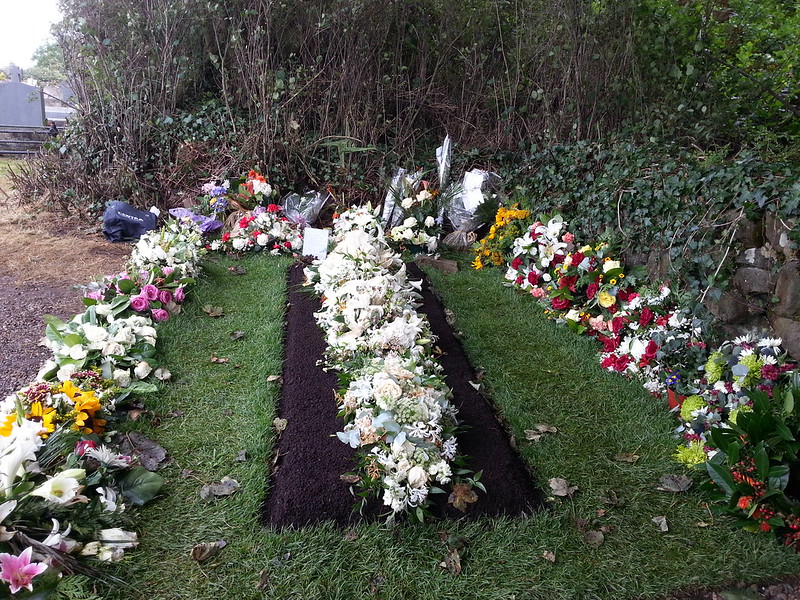
Seamus Heaney's grave, St Mary's Church, Bellaghy, Co. Derry
Heaney's grave, Bellaghy, Co. Derry

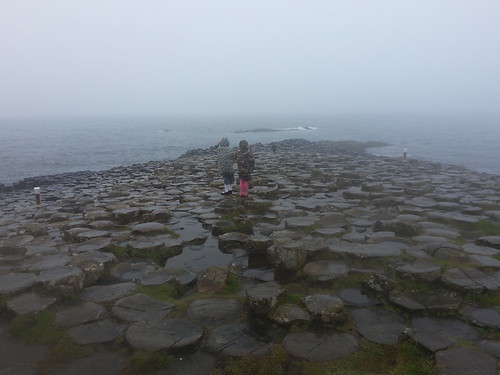
At Heaney's grave, shared with his parents and brother Christopher, we read “Mid Term Break” (about his baby brother's death and funeral) and pray a Rosary in Latin for the repose of all their souls, ending with a sung Salve Regina. Heaney loved Latin: famously, his last words to his wife, by text message, were "Noli timere". Other visitors to the grave, local men who were Heaney's contemporaries, join in with our Rosary and thank us afterwards for praying., apparently very few people do. After signing the book of condolence in the church, St Mary's Bellaghy, we drive due North toward the coast, pausing briefly at Bushmills to consider the science of distillation, before arriving at the Giant's Causeway – a World Heritage Site and natural wonder of volcanic basalt eroded into astonishing hexagonal columns like a giant three dimensional honeycomb. In addition to the fascinating hands-on geology, we learn about the kelp industry, about Irish mythology and that you get more soaked standing on the Antrim coast in a blowing gale than you do by plunging into a swimming pool. Fish and chips a little further around the coast, then a long drive back in the dark, home to our holiday cottage. A good day.


20130911_180358.jpg
Giant's Causeway, Co. Antrim

Not every home education day is an adventure. For each day like yesterday, there's one where my children drive each other (and me) crazy. Where the house is a mess, where someone has fed playdough to the cat; where the dog has chewed the eyepiece of one of the microscopes, and we can't find the answer key for the Latin workbook.

That's when the September not-back-to-school doubts start to creep in. Will my children suffer or benefit from the choices that we, their parents make? Will they end up illiterate / happy / unemployable / holy / overspecialised / expert / only fit for employment in a circus? Are we doing the right thing? Can any parent ever answer that question with 100% certitude?


20130918_190153.jpg


Then the Angelus bell chimes. The rhythm of daily life masters us gently and our family prayer leads to calm and resolution as I hand my fears over to Sede sapientiae – Our Lady, Seat of Wisdom to whom we've consecrated our home education undertaking.


Nothing is perfect – no school, no home, no family. In choosing to home educate we do two things: the first is take full responsibility for our children's education, for better or for worse; and the second is to place our hopes and fears into Our Lady's hands. But really, no matter where or with whom their children spend their weekday hours, these are two things that every Catholic parent, as first and primary educator,should do. We are in the business of educating souls: Sede sapientiae, ora pro nobis!

A version of this piece first appeared in Catholic Family News


Friday, 30 August 2013

Between my finger and my thumb / The squat pen rests; snug as a gun.

Please join me in praying for the repose of the soul of Seamus Heaney. I spent much of my pre-children life studying 20th C Irish writing and his work was central to my PhD research. I was fortunate to have met him on numerous occasions, some formal, others less so. I will fondly remember drinking Guinness with him in a small dark Belfast pub after an impromptu reading he gave to a small group of post-graduate students. He was not an overtly religious man, and had expressed an uneasy agnosticism over the years, but his poetry often articulated an innate sense of the divine in our lives and the nuances of the Catholicism that was indelibly imprinted upon the Ireland of his youth. He came from a humble family, the eldest of 9 children but despite being a famous poet by the time I met him in the early 1990s he was modest in his demeanour and generous with his time: truly one of nature's gentlemen. I pray that he will experience the joy of the beatific vision before long.


Réquiem ætérnam dona ei Dómine; et lux perpétua lúceat ei. Requiéscat in pace. Amen


++++++++++++++++++++++++++++++++++++++++++++++++++++++++++++

The Biretta

Like Gaul, the biretta was divided 
Into three parts: triple-finned black serge, 
A shipshape pillbox, its every slope and edge 
Trimly articulated and decided. 

Its insides were crimped satin; it was heavy too 
But sported a light flossy tassel 
That the backs of my fingers remember well, 
And it left a dark red line on the priest's brow. 

I received it into my hand from the hand 
Of whoever was celebrant, one thin 
Fastidious movement up and out and in 
In the name of the Father and of the Son AND 

Of the Holy Ghost... I placed it on the steps 
Where it seemed to batten down, even half-resist 
All the brisk proceedings of the Mass - 
The chalice drunk off and the patted lips. 

The first time I saw one, I heard a shout 
As an El Greco ascetic rose before me 
Preaching hellfire, Saurian and stormy, 
Adze-head on the rampage in the pulpit. 

Sanctuaries. Marble. Kneeling boards. Vocation. 
Some made it looked squashed, some clean and tall. 
It was as antique as armour in a hall 
And put the wind up me and my generation. 

Now I turn it upside down and it is a boat - 
A paper boat, or the one that wafts into 
The first lines of the Purgatorio 
As poetry lifts its eyes and clears its throat. 

Or maybe that small boat out of the bronze age 
Where the oars are needles and the worked gold frail 
As the intact half of a hatched-out shell, 
Refined beyond the dross into sheer image. 

But in the end it's as likely to be the one 
In Matthew Lawless's painting, The Sick Call, 
Where the scene is out on a river and it's all 
Solid, pathetic and Irish Victorian. 

In which case, however, his reverence wears a hat. 
Undaunting, half domestic, loved in crises, 
He sits listening as each long oar dips and rises, 
Sad for his worthy life and fit for it.

Seamus Heaney (13 April 1939 - 30 August 2013)


Matthew Lawless, "The Sick Call", National Gallery of Ireland


+++++++++++++++++++++++++++++++++++++++++++


Mid-Term Break

I sat all morning in the college sick bay
Counting bells knelling classes to a close.
At two o'clock our neighbors drove me home.

In the porch I met my father crying--
He had always taken funerals in his stride--
And Big Jim Evans saying it was a hard blow.

The baby cooed and laughed and rocked the pram
When I came in, and I was embarrassed
By old men standing up to shake my hand

And tell me they were "sorry for my trouble,"
Whispers informed strangers I was the eldest,
Away at school, as my mother held my hand

In hers and coughed out angry tearless sighs.
At ten o'clock the ambulance arrived
With the corpse, stanched and bandaged by the nurses.

Next morning I went up into the room. Snowdrops
And candles soothed the bedside; I saw him
For the first time in six weeks. Paler now,

Wearing a poppy bruise on his left temple,
He lay in the four foot box as in his cot.
No gaudy scars, the bumper knocked him clear.

A four foot box, a foot for every year.

Seamus Heaney (13 April 1939 - 30 August 2013)

Thursday, 11 October 2012

The old sow that eats her farrow...

News yesterday that abortion megabusiness (no honestly we're a) charity Marie Stopes are opening an abortion clinic in Belfast despite massive local opposition brought to mind Joyce's Portrait of the Artist as a Young Man where Stephen Dedalus describes Ireland as "the old sow that eats her farrow". Until now Ireland has been (officially at least) an abortion free zone both North and South of the border. It is interesting that pro-life issues are one of the few places that have traditionally seen unity between Catholics and protestants in the northern six counties.

The Belfast Telegraph has a vote as to whether Marie Stopes Ltd International should have been allowed to open the clinic. You can let them know what you think here.

Please pray that this diabolical enterprise is ended.

Yeat's words in The Second Coming seem equally apt:

    Things fall apart; the centre cannot hold;
    Mere anarchy is loosed upon the world,
    The blood-dimmed tide is loosed, and everywhere
    The ceremony of innocence is drowned;
 

Our Lady of Guadalupe, pray for the unborn of Ulster.